

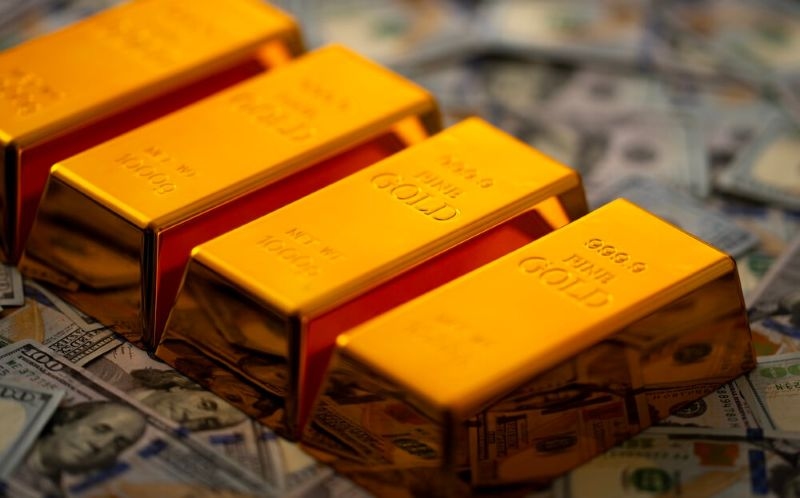
It's no secret that during difficult economic times, such as rising inflation, unpredictable markets, or fears of a recession, investors typically turn to gold. This is primarily due to the precious metal market's history of retaining its value for centuries, which makes it highly attractive in uncertain times.
When economic times are rough, not only can currency, stock markets, and consumer confidence be affected. It is during these times that the price of gold tends to spike because investors are seeking out safe havens. Taking into consideration gold's performance during market volatility, economic instability, and inflation will enable investors to make smarter decisions and a more solid portfolio.
The price of gold typically skyrockets in the midst of economic fear, as investors in countries that are going through recessions, banking crises, or the like will attempt to invest their money into gold. This happens as gold is one of the safest stores of value on earth during times of turmoil.
There is a secondary reason that gold's prices tend to increase during uncertain times: it increases the value of paper currency. Inflation can cause the value of a paper currency to be less due to the fact that the money supply has been increased too many times. Investors will consider buying gold to hedge against a decline in their currency and its worth.
One of the largest reasons that investors decide to purchase gold is as a safe haven and stable investment when money markets become increasingly erratic. The stock market can plunge dramatically during a recession, and this is the main reason that gold is considered a safe haven investment.
A second benefit to investing in gold is that it can easily be liquidated. Unlike many assets, gold can be sold anywhere on the globe relatively quickly, so an investor does not have to worry about trying to sell the asset during an unstable market when it's being sold for a specific price; this is why it is a part of many gold investment portfolios, to hedge against losing money due to stocks.
The link between inflation and the price of gold is one of the main reasons why investors will invest in the market. As inflation rises, so does the value of goods and services over time. The only thing that cannot be altered is the supply of gold; due to this, when inflation increases, so does the demand for gold. This is proven to be true for major inflations and world history, which shows the inflation rate rising along with the price of gold during these troubled times.
Gold vs. Stocks will come to be a determining factor when people want to know where to invest their money during unstable market conditions. While stocks are likely to give you long-term gains, their tendency to be negatively affected by market dips causes many investors to seek out the security that gold provides. This makes gold one of the most valuable safe-haven investments in today's markets.
Gold vs. Stocks is also considered because the price of gold is directly opposite to the price of stocks when the market experiences a crash, due to the fact that investors are moving money away from the stock market and into the market where gold resides, a "safe haven".
During a recession, people are normally afraid of not being able to get and keep jobs. This fear may lead to a decrease in demand for stocks and other risky investments and to an increase in the price of gold as a safer investment. During this uncertainty, many institutions may buy gold to offset the loss that people are expecting to receive.
Banks will also provide gold with a stimulus to rise in price during recessions and crashes. Lower interest rates from banks will often prompt investors to invest in the safe haven of gold, as they can no longer gain substantial amounts from banks that they could when rates were higher.
When interest rates get higher, investors will tend to transfer their money from gold to higher interest-yielding investments like bonds. When interest rates begin to decline, gold investment will then have an increase in demand. Also preferred by investors during uncertain economic times, gold is thought of as a store of value.
War, instability, terrorism, and international tension will also increase the price of gold, as this will cause investor fear and uncertainty around the globe, therefore causing investors to purchase more gold as the price will only rise, while traditional money may fall or rise, but not as fast as the price of gold.
A strong, balanced investment strategy is not to invest during highs and to sell during lows, but rather to buy gold on a regular basis. Gold investment options include actual bars or coins; exchange-traded funds, or even gold mining stocks. All three options present their own risks and rewards, but adding a certain percentage of gold can help even out the fluctuations during troubled market times.
Learn Further: Copper vs Gold Investing: Which One Is Better For Investing?
Gold is a valuable investment during difficult times because it is a reliable investment that has a history behind it that proves this point. Inflations, crashes, terrorist attacks, or war are all reasons why an investor might consider buying gold, and because of these events, the price of gold can increase immensely.
Watching trends in inflation and the different types of investments out there can help investors invest wisely and have a more stable and lasting portfolio.
It has been a trusted store of value for thousands of years and is seen as having no dependence upon the success of any specific company or country. For these reasons, gold is believed to hold its value through inflation, stock market crashes, and economic downturns.
The price of gold can be volatile and has moved fairly rapidly at times. Changes in the economy, inflation, stock prices, interest rates, and the political climate can all send gold prices shooting up or crashing down. Although generally considered safe in the long run, short-term price swings in gold are the norm.
Stocks have performed better in long-term gains compared to gold. However, gold has offered stability when times are unstable. Rather than picking one over the other, the question should really be comparing both gold vs stocks when it comes to managing a portfolio in the safest possible way.
The role of inflation and gold prices is intertwined in a few key ways. Firstly, gold is thought of as a store of value, so it should keep pace with rising costs and thus hold its value even as money's buying power diminishes due to inflation. So, when prices go up, so too can gold prices rise, and demand for gold should, in principle, increase. Interest rates also play a major role, as higher rates could be seen as being a much better investment compared to gold.
This content was created by AI